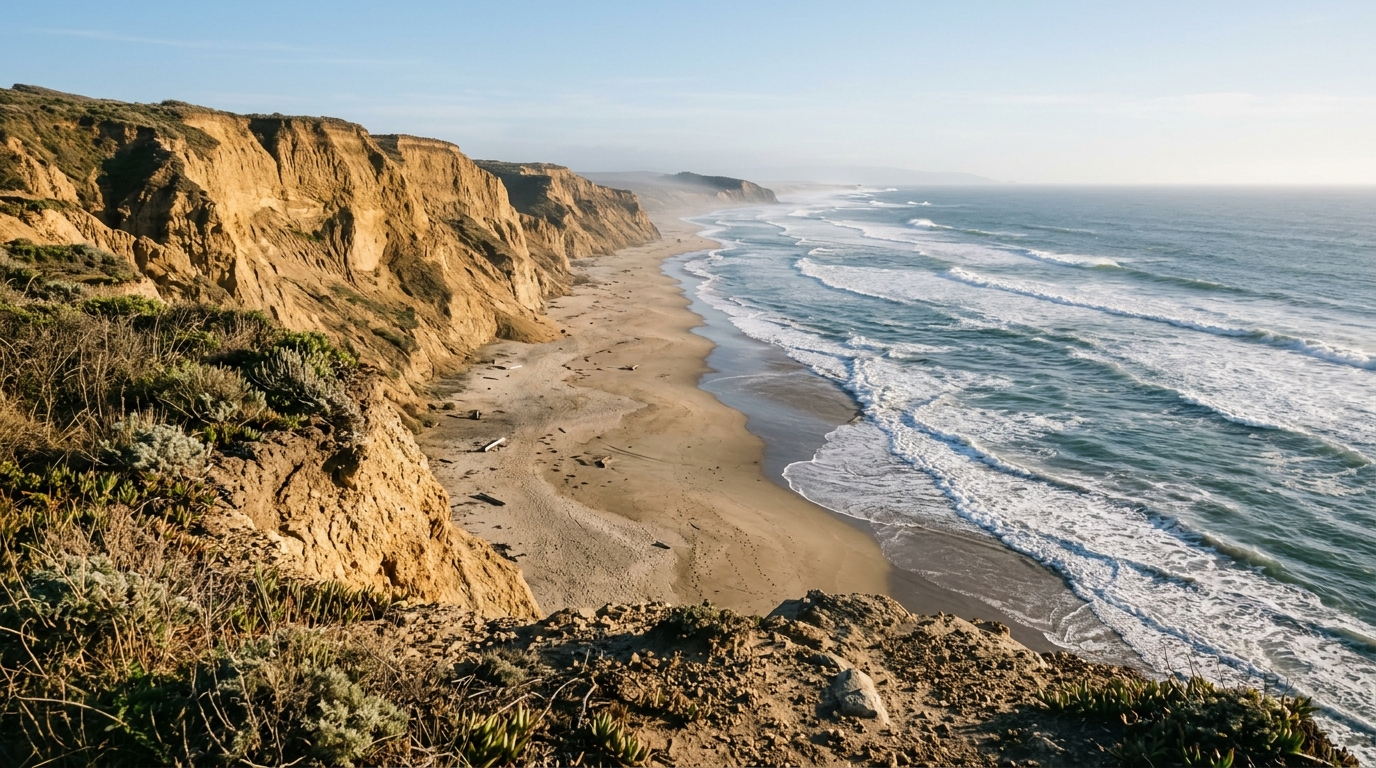
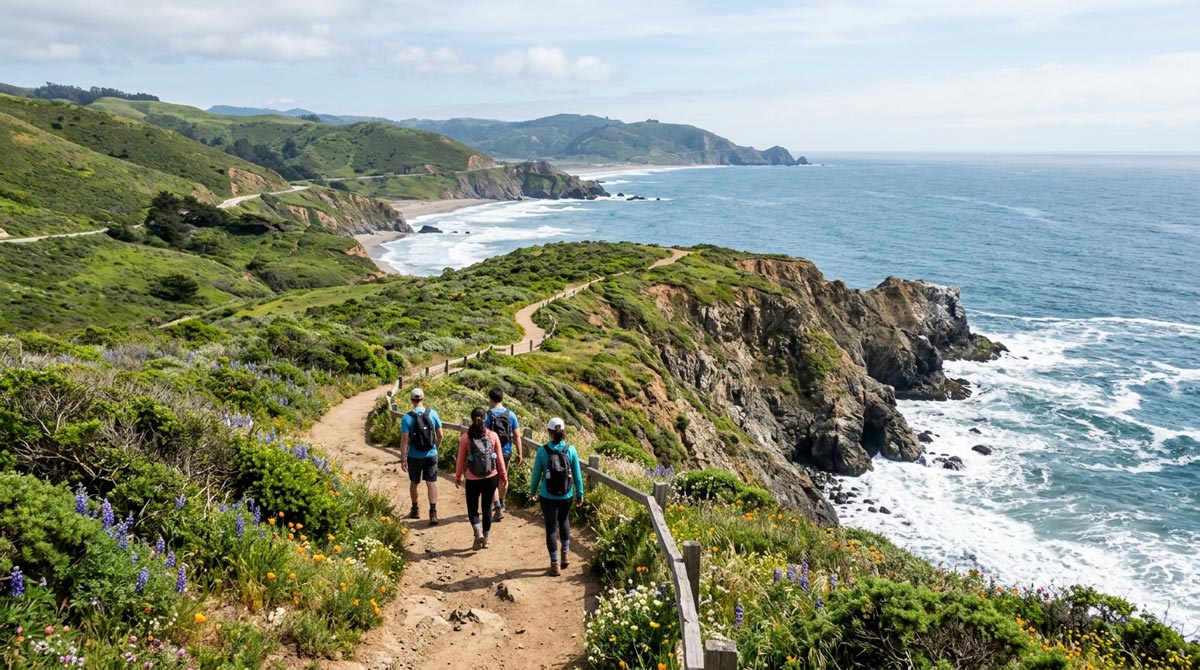
Located along Highway 1 between Half Moon Bay and Pescadero, the park offers a quieter alternative to some of the region’s better-known beaches.
The destination also represents a major conservation achievement. After years of restoration and planning, visitors can explore an area that previously lacked safe, managed public access.
Whether you are planning a coastal road trip, family outing, nature walk, or photography adventure, this guide explains what to expect and how to prepare for your visit.
Don Horsley County Park: What’s New at Tunitas Creek Beach?
Don Horsley County Park occupies a scenic section of coastline at the mouth of Tunitas Creek. The landscape combines dramatic sandstone cliffs, coastal vegetation, sandy beaches, and wildlife habitat.
Although the shoreline itself has long been public, accessing it was previously difficult. Visitors relied on unofficial paths, and unmanaged activity contributed to litter, environmental damage, and unsafe conditions.
In 2017, Peninsula Open Space Trust protected the property. Subsequently, the organization partnered with San Mateo County Parks and public agencies to develop safer access and restore sensitive habitats.
The completed project opened in August 2026, creating the county’s first newly developed park in more than a decade.
Discover the New Coastal Trails and Visitor Facilities
The park now features organized visitor facilities designed to support recreation while protecting the surrounding coastline.
Improvements include parking, restrooms, interpretive exhibits, scenic overlooks, picnic areas, and designated trails.
These additions make the destination easier to explore without relying on informal routes across unstable coastal terrain.
Scenic Overlooks and Accessible Walking Paths
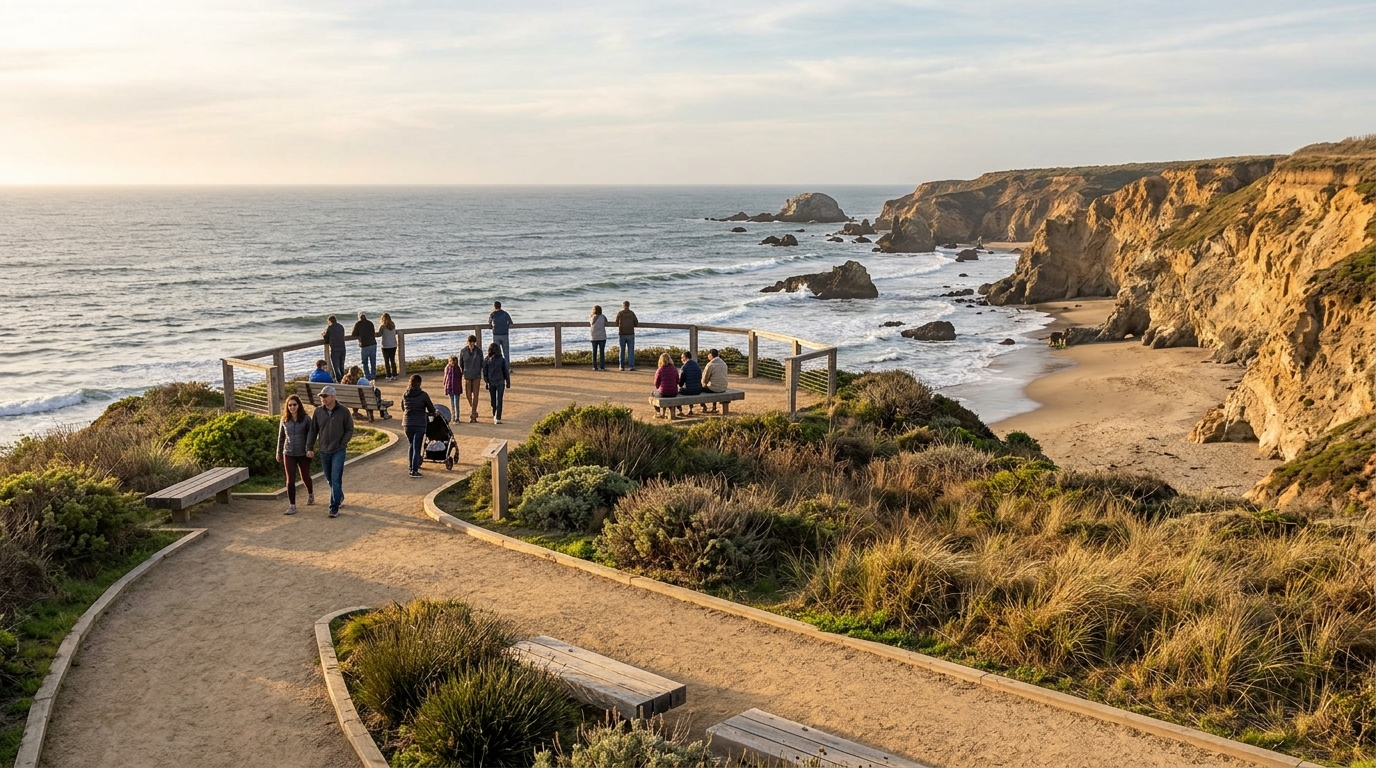
One of the park’s main attractions is its elevated coastal viewpoints. From the bluff, visitors can admire nearly a mile of sandy beach framed by rugged Northern California scenery.
The Mid-Bluff Trail provides a designated route from the parking area to the scenic overlook.
According to San Mateo County Parks, this accessible trail extends approximately half a mile and is suitable for walkers, strollers, and wheelchair users.
Visitors who want a shorter outing can enjoy the viewpoints without traveling to the beach itself.
Additionally, the overlook area provides opportunities for photography, wildlife observation, and quiet appreciation of the landscape.
However, visitors should remain on designated paths and avoid approaching unstable cliff edges.
Coastal erosion and changing weather conditions can create hazards even when the surroundings appear calm.
Families should supervise children closely, particularly near slopes and overlooks.
Beach Access, Picnic Areas, and Park Amenities
Visitors interested in reaching the shoreline can use designated beach access trails.
The Schilling Trail connects the upper parking area to the beach over approximately 0.6 mile.
Meanwhile, the John Pitcher Trail provides a shorter connection from the mid-bluff area toward the shore.
These routes offer opportunities to explore the coastal landscape while reducing damage to sensitive vegetation.
However, trail conditions may change after storms or periods of erosion. Always follow posted closure notices.
The park also includes picnic and gathering areas where visitors can relax and enjoy the ocean atmosphere.
Restrooms and interpretive exhibits add convenience and educational value.
Nevertheless, there are no drinking fountains or running-water sources available for visitors, according to the county’s safety guidance.
Therefore, everyone should bring sufficient drinking water, especially during warmer weather or longer outings.
Visitors must also pack out their trash because waste collection facilities are limited.
Wildlife, Coastal Conservation, and Natural History
Don Horsley County Park is more than a recreational beach. It also protects important natural resources along the San Mateo County coast.
The area contains coastal bluffs, creek habitat, sandy shoreline, and sensitive wildlife areas.
Preserving these environments was a central goal throughout the park’s development.
Protecting Shorebirds and Coastal Habitats
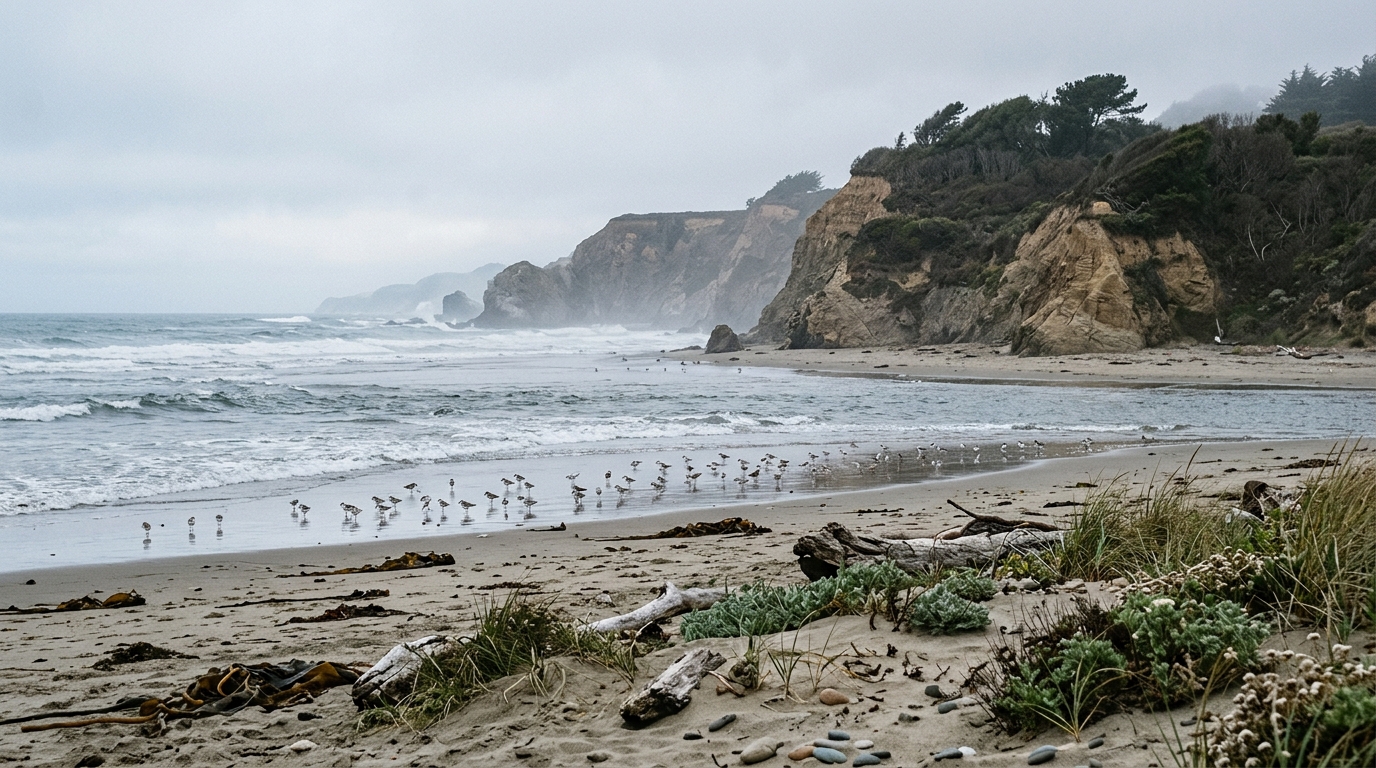
The Tunitas Creek estuary provides habitat for several important species, including the western snowy plover, California red-legged frog, and native steelhead trout.
The western snowy plover is a threatened shorebird that uses coastal beaches for resting and feeding.
Meanwhile, creek habitats support aquatic and amphibian species that depend on healthy environmental conditions.
Because these ecosystems are sensitive, visitors should avoid disturbing animals or entering protected habitat.
Furthermore, recreational activities should remain within designated public areas.
The park’s conservation work demonstrates how environmental restoration can improve public access while safeguarding natural resources.
Wildlife enthusiasts may enjoy observing shorebirds from an appropriate distance, particularly during quieter parts of the day.
However, sightings are never guaranteed, and animals should never be approached or fed.
The History Behind the Park’s Transformation
Tunitas Creek Beach lies within the ancestral lands of the Ohlone peoples. Its history includes Indigenous communities, early exploration, private ownership, and modern conservation efforts.
For more than a century, much of the surrounding property remained privately owned.
Although visitors could legally access the beach, inadequate facilities and unofficial paths created environmental and public safety concerns.
Peninsula Open Space Trust acquired and protected the property in 2017.
County officials then worked with conservation partners to restore the site and introduce appropriate public amenities.
The project cost approximately $24 million, supported by private contributions and public funding.
Former San Mateo County Supervisor Don Horsley played an important role in protecting the location and advancing public access.
The park now carries his name in recognition of that work.
Visitors can learn more through interpretive displays and the free English-language audio tour available through the TravelStory app.
Planning Your Visit to Don Horsley County Park in 2026
Planning ahead will help you enjoy the park safely and comfortably.
The destination is located at 20775 Cabrillo Highway South, Half Moon Bay, California, along Highway 1 between Half Moon Bay and Pescadero.
General admission is free. However, parking capacity and seasonal operating hours can affect your visit.
Parking, Opening Hours, Beach Safety, and Nearby Attractions
The park provides bluff-top parking for approximately 80 vehicles.
Because spaces are limited, arriving early may improve your chances of finding convenient parking during weekends and holidays.
Visitors should use designated parking spaces rather than stopping along unsafe highway shoulders.
The park opens daily at 8:00 a.m. Closing hours change throughout the year.
For October 21, 2026, the published closing time is 6:00 p.m. Seasonal changes may occur because of weather, maintenance, or emergencies.
Important visitor information
- Location: 20775 Cabrillo Highway South, Half Moon Bay, CA 94019.
- Park size: Approximately 58 acres.
- Admission: Free.
- Opening time: 8:00 a.m. daily.
- Parking: Approximately 80 vehicles.
- Activities: Walking, photography, picnicking, beach exploration, and wildlife observation.
Check the county’s latest advisories before departing because individual trails and facilities may close temporarily.
Beach safety and ocean conditions
The Pacific Ocean can be dangerous along this stretch of coastline.
According to San Mateo County Parks, there are no lifeguards on duty at Tunitas Creek Beach.
Cold water, strong currents, unexpected waves, and changing surf conditions can create serious hazards.
Even shallow water can become dangerous when powerful waves suddenly reach the shore.
Therefore, visitors should avoid turning their backs on the ocean and remain alert near the waterline.
Children should stay close to responsible adults at all times.
Swimming should not be treated as a routine recreational activity at this location.
Additionally, dogs, camping, campfires, and portable barbecues are prohibited under the park’s published rules.
What to bring for your coastal adventure
Prepare for changing weather by packing layered clothing and a wind-resistant jacket.
Comfortable walking shoes are helpful because the terrain includes trails, slopes, and sandy surfaces.
Bring enough drinking water for everyone, along with snacks, sunscreen, and a camera if desired.
Visitors may also appreciate binoculars for observing birds and coastal scenery from a respectful distance.
Most importantly, carry a bag for your trash and leave the environment as you found it.
Other places to explore nearby
Don Horsley County Park fits naturally into a scenic Highway 1 itinerary.
Half Moon Bay offers coastal restaurants, shops, and additional beach destinations.
Farther south, Pescadero provides a small-town atmosphere with local dining and access to surrounding natural areas.
Visitors interested in more hiking opportunities can explore our guide to the best coastal trails and outdoor adventures in San Mateo County.
Combining a short coastal walk with a nearby town visit can create a memorable day trip.
Frequently asked questions
When did Don Horsley County Park open?
The park officially opened to the public on August 17, 2026.
Is there an entrance fee?
No. General public admission is free.
Are there accessible walking paths?
Yes. The Mid-Bluff Trail connects the parking area to an accessible coastal overlook.
Can visitors bring dogs?
No. Dogs are not permitted under the park’s published visitor rules.
Is swimming recommended?
The beach has no lifeguards, and dangerous ocean conditions can occur. Visitors should exercise extreme caution around the surf.
Where can visitors find official information?
Visit the San Mateo County Parks official Don Horsley Park page for current hours, maps, visitor rules, and advisories.
Final thoughts
Don Horsley County Park offers an exciting new way to experience San Mateo County’s remarkable coastline.
Its scenic overlooks, accessible paths, sandy shoreline, and conservation-focused design make it a worthwhile destination for nature lovers, photographers, and families.
However, the park’s rugged environment requires preparation, responsible behavior, and careful attention to ocean safety.
By checking current conditions and respecting protected areas, visitors can enjoy this special coastal destination while helping preserve it for future generations.
Editor’s note: Visitor information reflects official county publications available as of October 21, 2026. Hours, trail access, and park rules may change.